
Indoor and Outdoor Team Building Activities That Actually Work
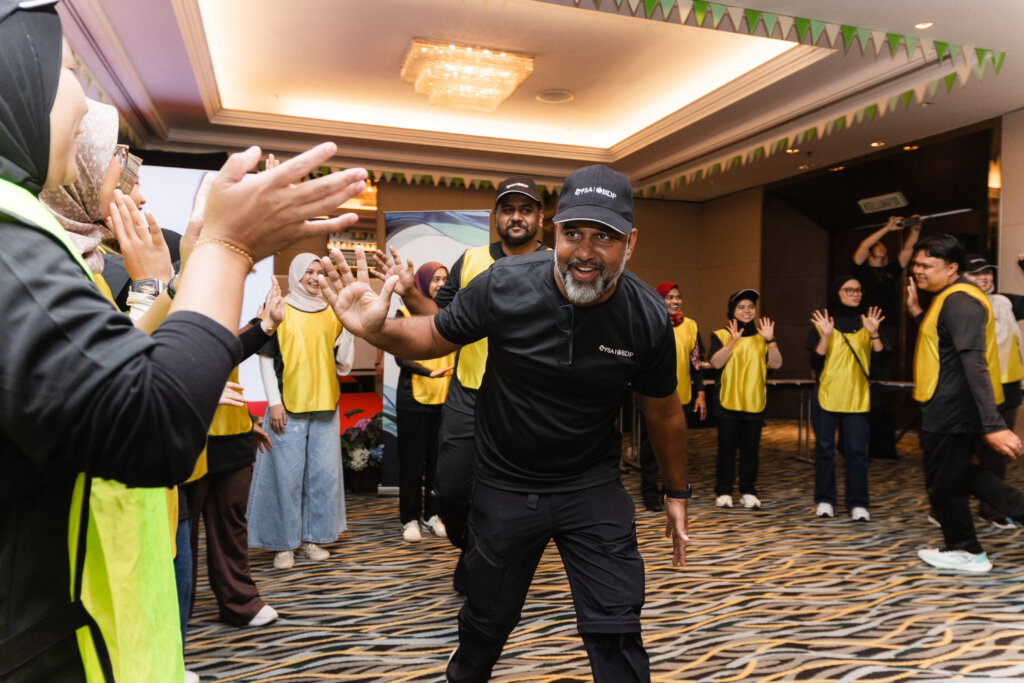
Looking for team building activities that actually work? 👀
When planning a corporate team building programme, it is easy to focus on one question:
“Is this activity fun?” 🎉
But fun alone does not necessarily make an activity effective.
A good corporate team building activity should give participants a reason to communicate, collaborate, solve problems, listen to one another or work towards a shared goal. The activity is simply the environment where those behaviours get tested.
That is why choosing the right activity depends on more than whether you have an indoor hall or a big outdoor field.
You also need to consider your team size, venue, physical requirements, learning objectives and difficulty level. Vspire Academy’s previous guide similarly highlights group size, venue, physical requirements, learning objectives and difficulty as important considerations when organising team building activities.
So, whether you’re planning an indoor team building programme because of the weather ☔ or looking for an outdoor team building activity that gets everyone moving 🌳, here are some activities worth considering.
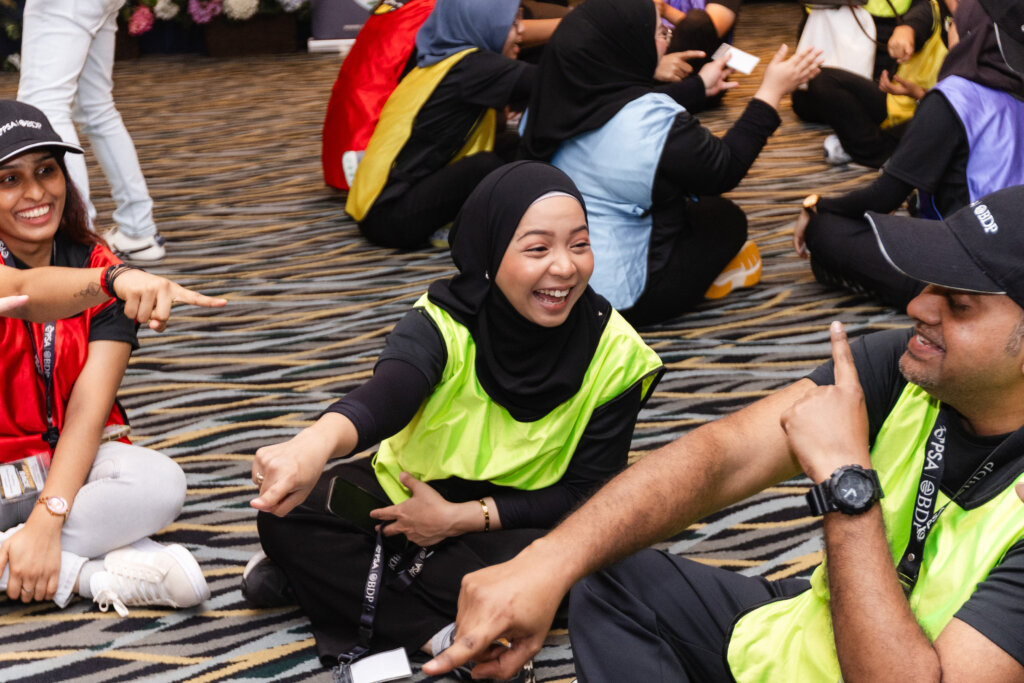
What Makes a Team Building Activity Actually Work? 🎯
Before getting into the activities, let’s address the bigger question.
What does “actually work” mean?
A team building activity becomes more useful when participants need one another to complete the challenge.
For example:
- 🗣️ One person has information while another has to act on it.
- 🤝 Everyone has to coordinate their movements.
- 🧠 Different people contribute different ideas.
- ⏱️ The team has to make decisions under time pressure.
- 🎨 Participants have to combine individual ideas into one solution.
- 👥 The team has to organise itself without being given every answer.
Communication-focused team exercises can help participants practise listening, clarity, empathy and trust, while problem-solving activities can also encourage cooperation and creative thinking.
The activity itself is the vehicle.
The learning objective is the destination. 🎯
Indoor Team Building Activities 🏠
Indoor team building activities are particularly useful when you have limited outdoor space, unpredictable weather or a team that prefers a more controlled environment.
They can also be useful for activities that focus heavily on communication, observation, strategy, creativity and problem-solving.
Here are five activities that can work particularly well indoors.
1) Catch Me If You Can 🍎🍊
Quick Guide 📝
- 🌟 Benefits: Listening, reaction speed, concentration and adaptability
- 👥 Recommended Pax: 10–100+ pax
- 🧰 Basic Materials: No props required
- 📍 Space: Open indoor area where participants can stand comfortably
- 🎯 Learning Outcomes: Active listening, attention, quick decision-making and adapting to changing instructions
Overview 🔍
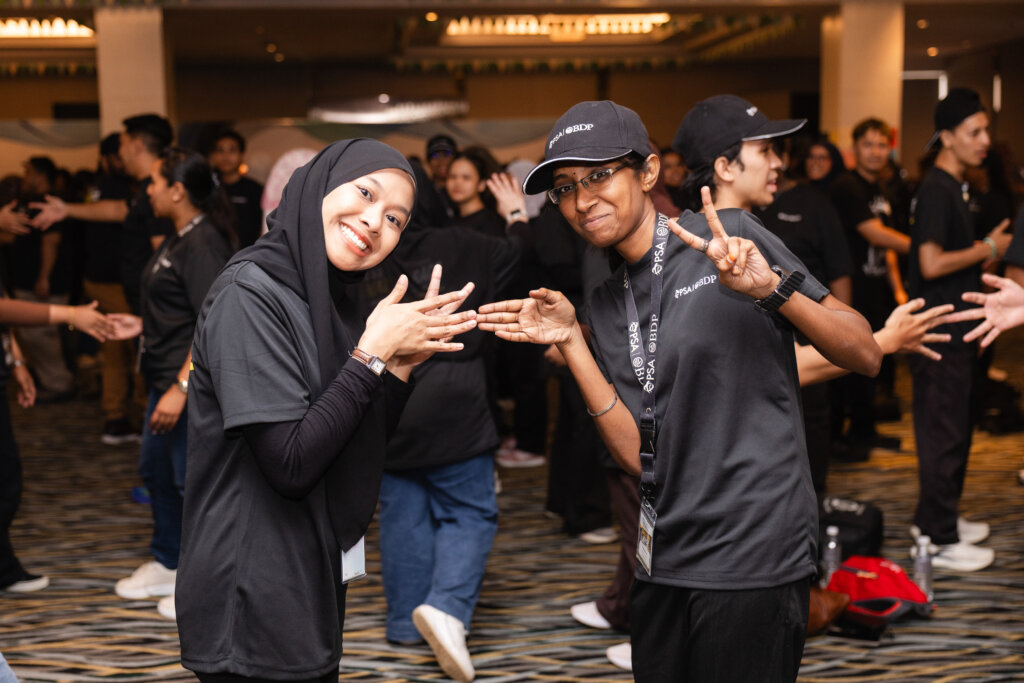
Catch Me If You Can is a simple activity that demonstrates how quickly participants react when instructions change.
The activity uses two opposing commands — Apple and Orange — to test whether participants are genuinely listening or simply reacting based on expectation.
It is easy to organise and requires virtually no equipment, making it a useful warm-up or energiser for an indoor team building programme.
How It Works 💪
- Pair participants with someone of the same gender where practical and comfortable.
- Each pair stands facing each other with their palms straight and middle fingers touching.
- One participant is assigned Apple, while the other is assigned Orange.
- When the trainer gives the command to catch, Apple must try to catch Orange’s finger while Orange tries to move away.
- The trainer can deliberately use different words or commands to test participants’ attention.
- Halfway through the activity, switch the rule so Orange catches Apple.
- Continue with different commands and rounds to test how quickly participants adapt.
Organising Tip 💡
The trainer should avoid making the instructions too predictable. The point is not simply to react quickly, but to listen carefully and adapt when the rules change.
Because participants are working in close proximity, make sure everyone is comfortable with the setup and avoid forcing physical contact.
2) Bomb Squad 💣
- 🌟 Benefits: Communication, planning, coordination and problem-solving
- 👥 Recommended Pax: 10–100+ pax
- 🧰 Basic Materials: Activity-specific props, ropes, cones or other challenge equipment
- 📍 Space: Open indoor area
- 🎯 Learning Outcomes: Team coordination, communication, strategy and problem-solving
Overview 🔍
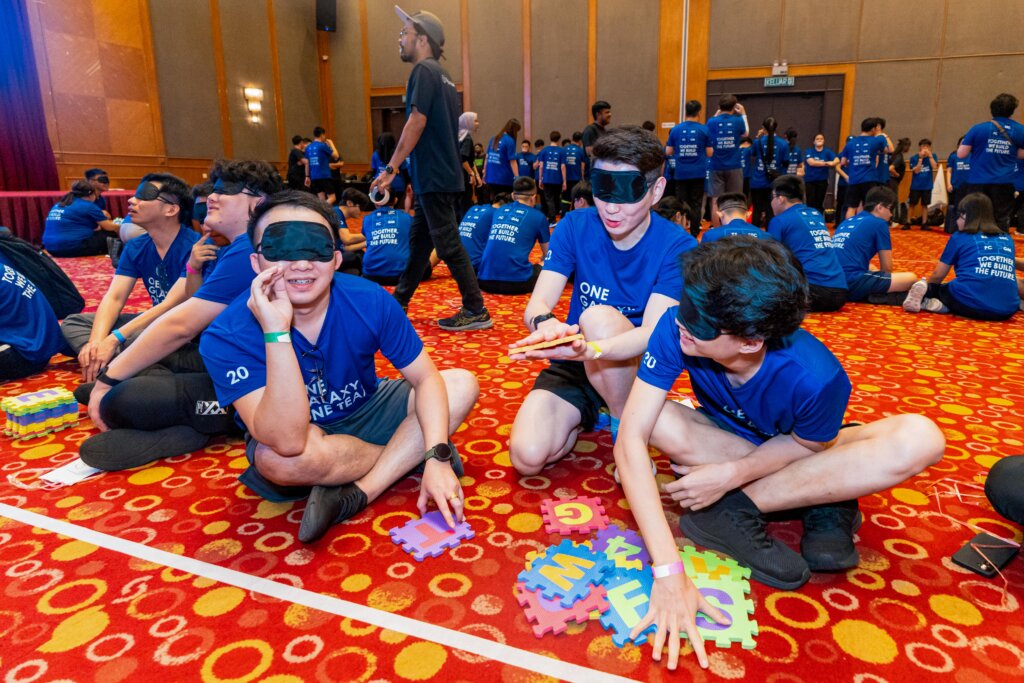
Bomb Squad challenges teams to work together under pressure to complete a task while following specific rules and restrictions.
The activity encourages participants to plan before acting, communicate clearly and coordinate their movements instead of relying on individual effort.
How It Works 💪
- Divide participants into smaller teams.
- Introduce the challenge objective and explain the rules.
- Provide each team with the required equipment or challenge materials.
- Teams discuss their strategy before beginning.
- Participants work together to complete the challenge while following the restrictions set by the trainer.
- The trainer observes how teams communicate, delegate responsibilities and respond to problems.
- Teams are evaluated based on the agreed criteria, such as completion, time or accuracy.
Organising Tip 💡
Avoid explaining every possible solution. Give participants enough information to understand the objective and restrictions, then allow them to figure out the solution themselves.
The challenge becomes more meaningful when teams have to communicate, experiment and adjust their strategy rather than simply follow instructions.
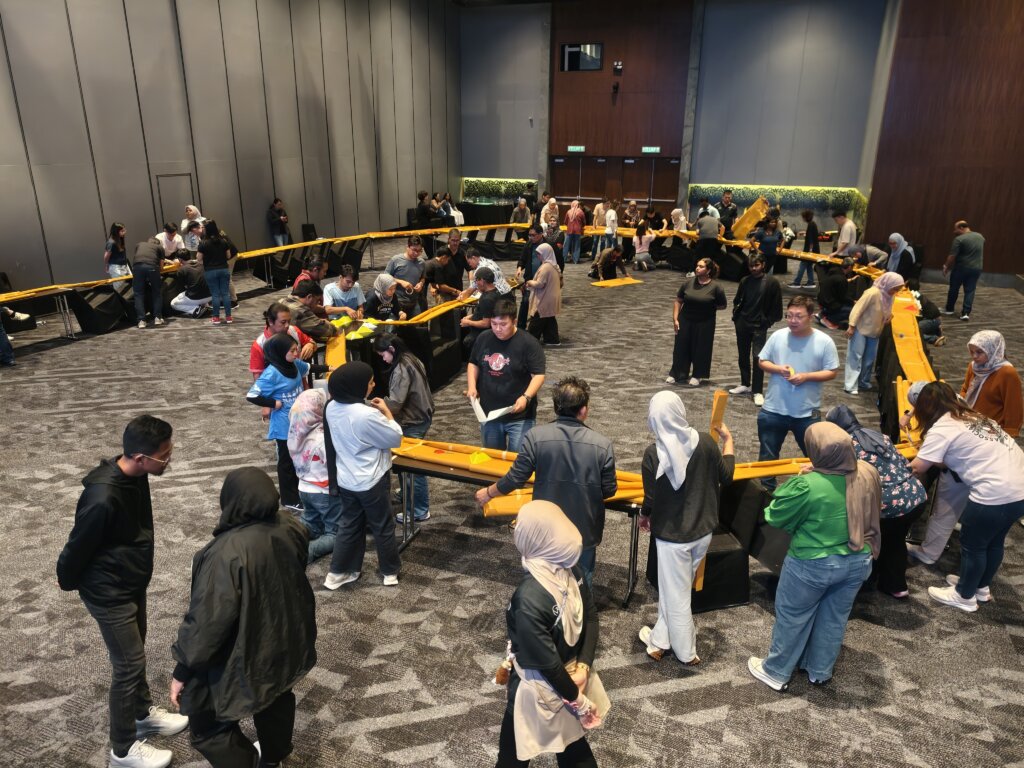
3) Bridge To Unity 🌉
Quick Guide 📝
- 🌟 Benefits: Collaboration, planning, creativity and problem-solving
- 👥 Recommended Pax: 10–100+ pax
- 🧰 Basic Materials: Paper, chopsticks, tape or other bridge-building materials and a remote-control car
- 📍 Space: Tables or workstations with enough room for teams to build and test their bridges
- 🎯 Learning Outcomes: Team planning, resource management, creativity and collaborative problem-solving
Overview 🔍
Bridge To Unity challenges teams to design and build a bridge capable of supporting or allowing a remote-control car to travel across it.
While the task sounds straightforward, teams need to communicate, divide responsibilities and test their ideas before arriving at a workable solution.
How It Works 💪
- Divide participants into teams.
- Provide each team with the same quantity of building materials.
- Explain the required bridge specifications and challenge objective.
- Teams discuss their design and decide how to use their available materials.
- Participants build their bridge within the allocated time.
- Teams test their bridges using the remote-control car.
- If necessary, teams make adjustments before the final test.
- Evaluate the bridges based on the agreed criteria.
Organising Tip 💡
Give every team the same resources and time limit to make the challenge fair.
You can also introduce additional restrictions, such as a limited amount of tape or a specific bridge length, to increase the difficulty.
The debrief can focus on planning, communication, resource allocation and how teams responded when their first solution did not work.
4) Roti Canai 🫓
Quick Guide 📝
- 🌟 Benefits: Relaxation, interaction, trust and team bonding
- 👥 Recommended Pax: 10–100+ pax
- 🧰 Basic Materials: No props required
- 📍 Space: Enough room for participants to form lines comfortably
- 🎯 Learning Outcomes: Team interaction, awareness, comfort and informal bonding
Overview 🔍
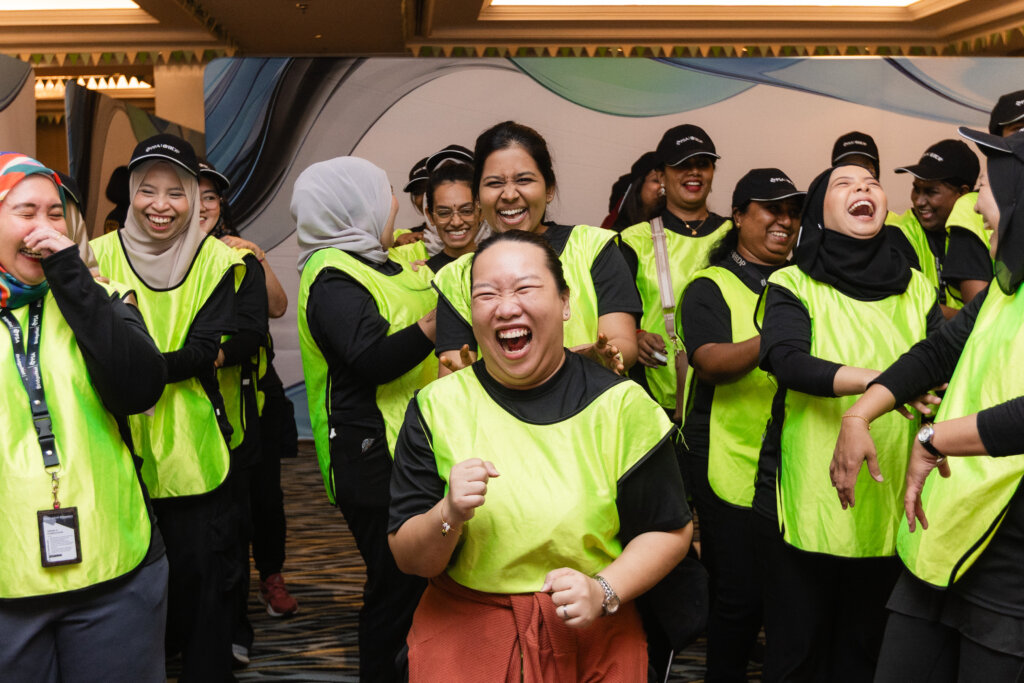
A Malaysian favourite gets a team building twist in Roti Canai.
Participants form lines and follow a series of playful massage-style movements, creating a light-hearted activity that can help break down barriers between colleagues.
It works particularly well as an energiser or bonding activity during a longer programme.
How It Works 💪
- Divide participants into lines of around 5–8 people.
- Participants stand one behind another.
- Following the trainer’s instructions, participants perform movements such as chopping, kneading and light punching on the back of the person in front.
- The trainer can introduce a tickling movement as part of the sequence.
- Participants then turn 180 degrees.
- The sequence is repeated with the person who was previously behind them now in front.
- Finish with a light-hearted group interaction or transition into the next activity.
Organising Tip 💡
This activity involves physical contact, so participant comfort and consent should come first.
Give participants the option to opt out or modify the activity if they are uncomfortable. Keep movements light and avoid anything that could cause pain or injury.
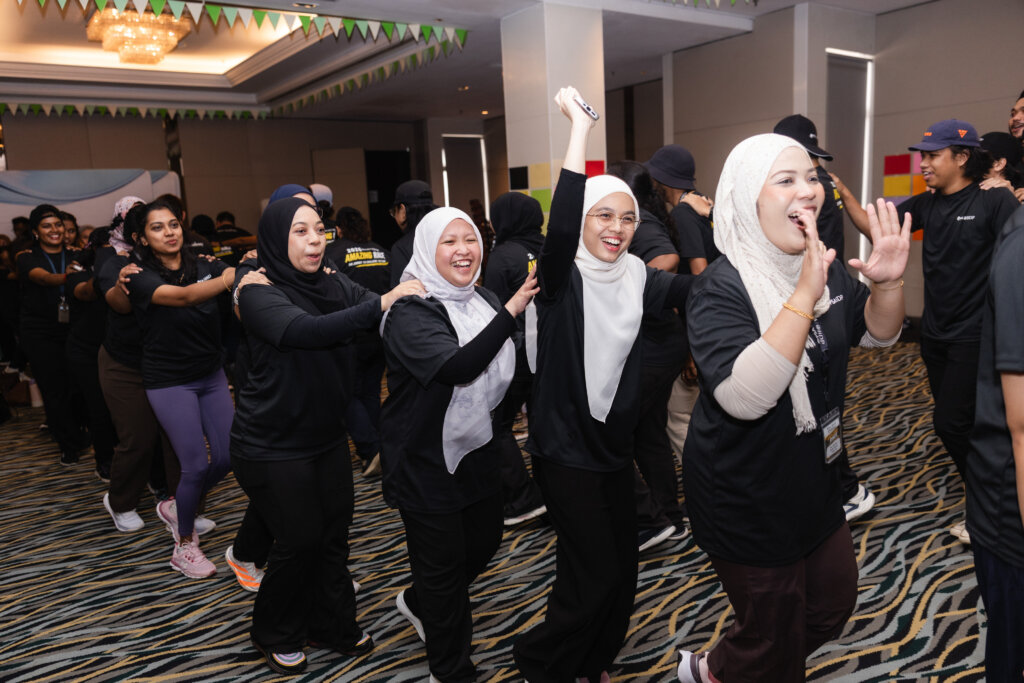
5) Rock Paper Scissors Train 🚂
Quick Guide 📝
- 🌟 Benefits: Energy, interaction, confidence and group bonding
- 👥 Recommended Pax: 20–200+ pax
- 🧰 Basic Materials: No props required
- 📍 Space: Open indoor area with enough room for participants to move around
- 🎯 Learning Outcomes: Interaction, adaptability, confidence and group engagement
Overview 🔍
Take the classic Rock Paper Scissors game and turn it into a growing team challenge.
Participants battle one another, with the losing player joining the winner’s train. As the rounds continue, individual players become larger groups until the final two trains face off.
It is simple, fast and highly energetic.
How It Works 💪
- Ask participants to find a partner.
- Each pair plays Rock Paper Scissors.
- The loser joins the winner’s train by standing behind them.
- The winning player continues moving with their growing train.
- When two trains meet, the front players play Rock Paper Scissors.
- The losing train joins behind the winning train.
- Continue until there are only two large trains remaining.
- The final front players compete to determine the winning train.
- Celebrate the winning team with a fun parade or victory chant.
Organising Tip 💡
Encourage participants to chant or cheer for the person leading their train. This keeps the activity energetic even for participants who are no longer directly competing.
It is also a great way to get a large group moving and interacting without requiring complicated equipment.
Outdoor Team Building Activities 🌳
Outdoor team building activities provide more room for movement, larger challenges and a change of environment.
They can be particularly effective for companies looking to combine team bonding, physical activity and an outdoor experience.
6) Balance The Bottle 🍾
Quick Guide 📝
- 🌟 Benefits: Coordination, communication, patience and teamwork
- 👥 Recommended Pax: 10–100+ pax
- 🧰 Basic Materials: Tarp, ropes or strings and a filled water bottle
- 📍 Space: Flat outdoor area with enough room for teams to move
- 🎯 Learning Outcomes: Coordination, communication, shared control and problem-solving
Overview 🔍
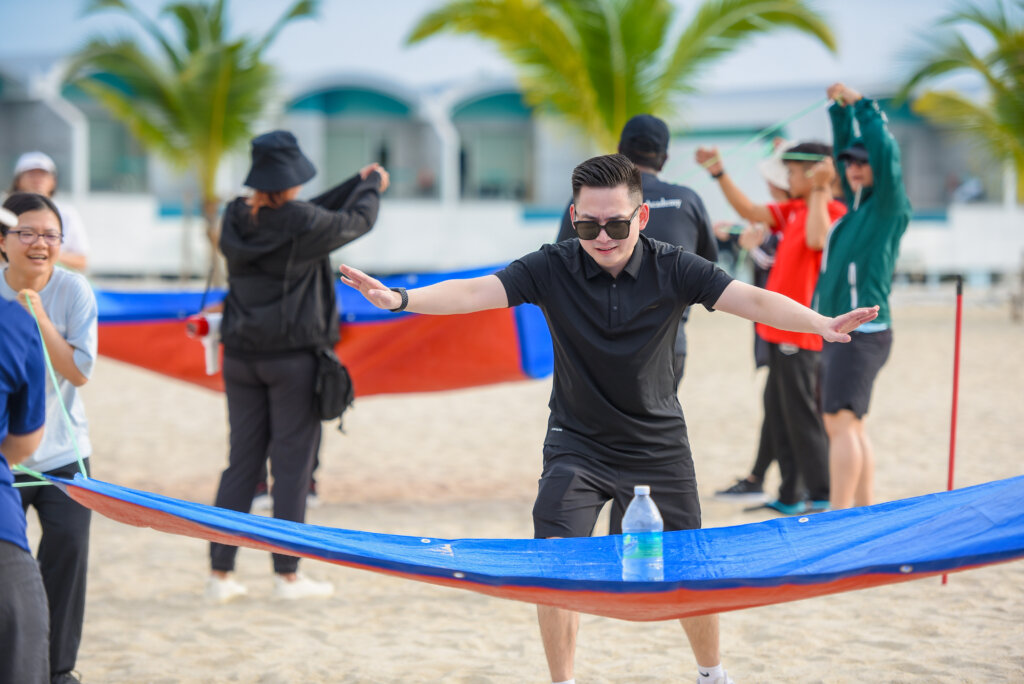
Balance The Bottle is a team coordination challenge where participants must work together to transport a bottle from one point to another without allowing it to fall.
The challenge requires everyone to coordinate their movements rather than having one person control the activity.
How It Works 💪
- Place a filled water bottle in the centre of a tarp.
- Attach strings around the tarp so that participants can hold and control it.
- Divide participants into teams.
- Each participant takes hold of a string.
- The team must coordinate their movements to lift and move the tarp.
- Transport the bottle from the starting point to the designated finishing point.
- If the bottle falls, apply the agreed penalty or restart the challenge.
- The team that completes the challenge according to the rules wins.
Organising Tip 💡
The challenge becomes significantly more difficult when the bottle is filled higher or when the route includes obstacles.
However, make sure the difficulty is appropriate for the group. The objective should be to encourage coordination and communication, not simply to make the challenge frustrating.
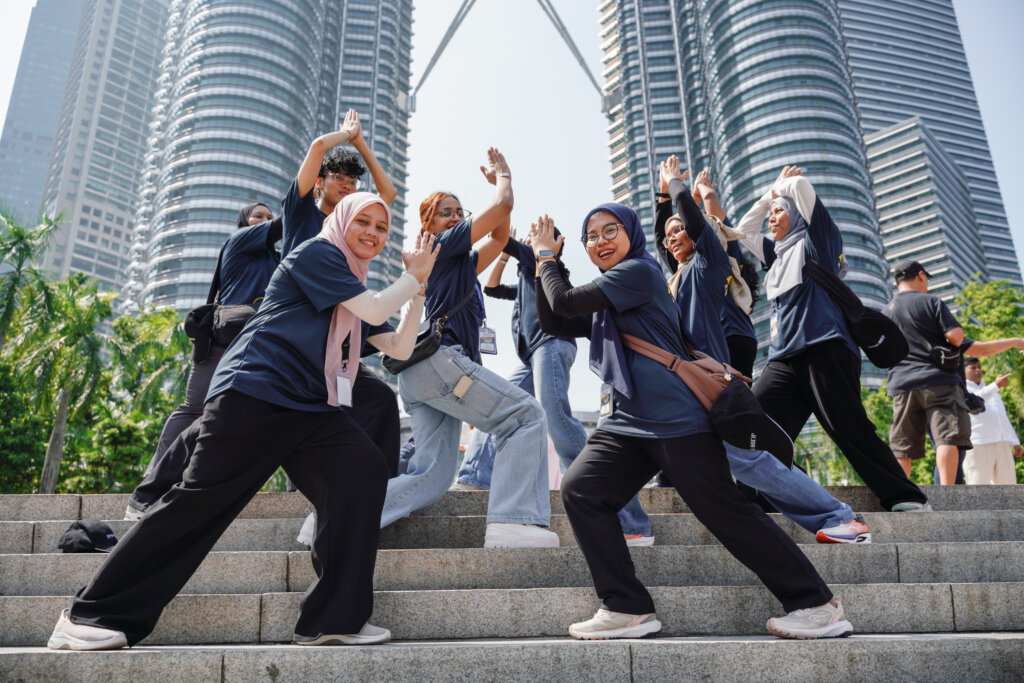
7) Amazing Race 🗺️
Quick Guide 📝
- 🌟 Benefits: Problem-solving, teamwork, communication, navigation and adaptability
- 👥 Recommended Pax: 20–200+ pax
- 🧰 Basic Materials: Clue cards, maps, challenge materials, score sheets and mobile phones where appropriate
- 📍 Space: Outdoor venue with multiple checkpoints or activity areas
- 🎯 Learning Outcomes: Team strategy, communication, decision-making and time management
Overview 🔍
The Amazing Race is one of the most flexible outdoor team building activities because it can combine multiple challenges into one programme.
Teams travel between checkpoints, solve clues and complete different tasks before moving on to the next stage.
How It Works 💪
- Divide participants into teams.
- Provide each team with their starting instructions or first clue.
- Teams navigate to different checkpoints.
- At each checkpoint, teams complete a challenge or solve a puzzle.
- Once completed, teams receive their next clue.
- Teams continue until they reach the final checkpoint.
- Trainers or facilitators monitor the teams and record completion times or scores.
- The team with the highest score or best completion time wins, depending on the format.
Organising Tip 💡
Do not make every checkpoint purely physical.
A stronger corporate Amazing Race can combine physical challenges, puzzles, communication tasks, creativity and observation challenges.
This gives different types of participants opportunities to contribute and makes the programme more inclusive.
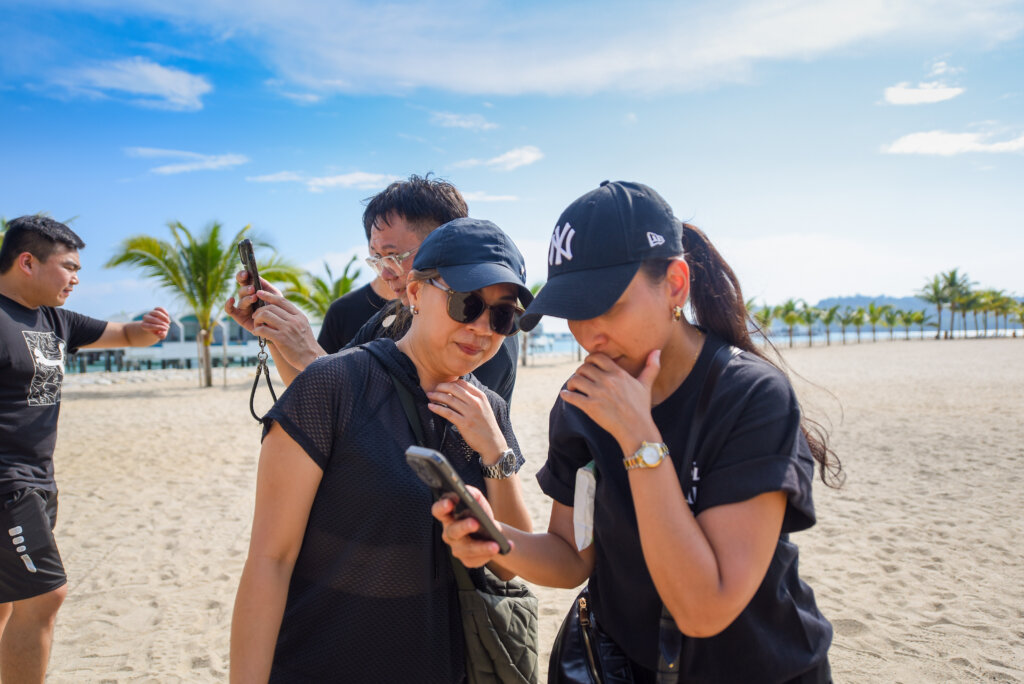
8) Photography Treasure Hunt 📸
Quick Guide 📝
- 🌟 Benefits: Creativity, observation, communication and teamwork
- 👥 Recommended Pax: 10–200+ pax
- 🧰 Basic Materials: Smartphones or cameras, clue lists and score sheets
- 📍 Space: Outdoor venue with multiple locations or points of interest
- 🎯 Learning Outcomes: Creativity, communication, planning and observation
Overview 🔍
A Photography Treasure Hunt turns the venue into a playground for creativity.
Teams receive a list of things they need to photograph or recreate. Instead of simply racing from one point to another, participants need to interpret the instructions, plan their shots and work together to complete the list.
How It Works 💪
- Divide participants into teams.
- Provide each team with the photography challenge list.
- Explain the time limit and rules.
- Teams move around the venue to complete the challenges.
- Participants take photographs based on the instructions.
- Teams return before the deadline and submit their photographs.
- Trainers review the photographs based on the agreed scoring criteria.
- Award points for creativity, accuracy, completion or other criteria.
Organising Tip 💡
Make the challenges open-ended enough to encourage creativity.
Instead of simply asking participants to photograph a specific object, try challenges such as “Create a human pyramid”, “Recreate a famous movie scene” or “Take a photo representing teamwork.”
This makes the activity more interactive and gives teams more opportunities to collaborate.
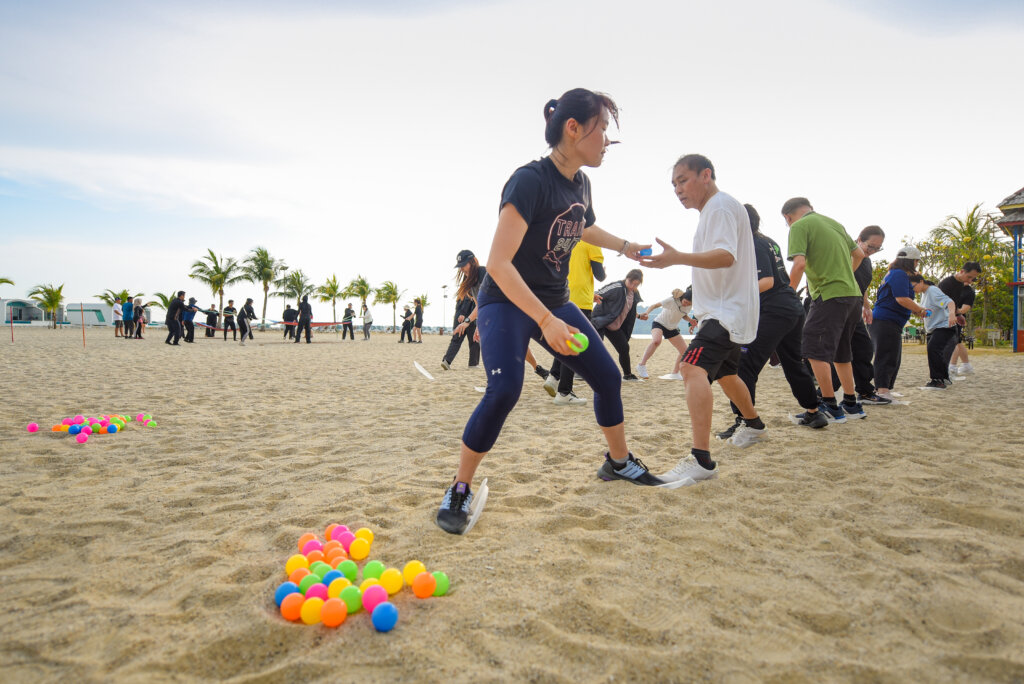
9) Ping Pong Chain 🏓
Quick Guide 📝
- 🌟 Benefits: Coordination, communication, patience and teamwork
- 👥 Recommended Pax: 10–100+ pax
- 🧰 Basic Materials: Ping pong balls and simple transfer tools such as cups, tubes or other activity-specific equipment
- 📍 Space: Flat outdoor or indoor area where teams can form a line
- 🎯 Learning Outcomes: Coordination, communication, consistency and team problem-solving
Overview 🔍
Ping Pong Chain requires participants to form a line and work together to transfer a ping pong ball from one point to another.
The challenge can be adapted using different tools and mechanics, but the central idea remains the same: one person’s actions affect the next person’s ability to succeed.
How It Works 💪
- Divide participants into teams.
- Ask each team to form a line.
- Give each participant the equipment required to transfer the ping pong ball.
- Place the ping pong ball at the starting point.
- The first participant begins the transfer.
- Participants pass the ball through the chain without directly carrying it by hand, depending on the chosen format.
- If the ball falls, apply the agreed rule or restart from the designated point.
- Continue until the ball reaches the finishing point.
- The fastest team or team with the highest score wins.
Organising Tip 💡
There are many ways to customise this activity.
You can change the distance, equipment, transfer method or penalties depending on your group.
The most important part is making sure the rules are clear before the activity starts so teams can focus on coordination and execution rather than figuring out unclear mechanics.
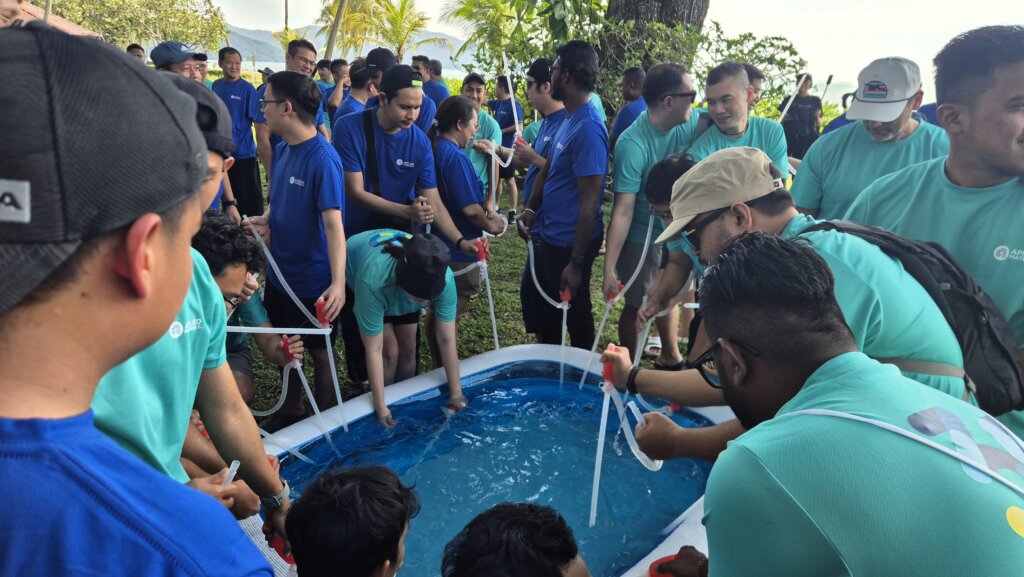
10) Pass The Water 💧
Quick Guide 📝
- 🌟 Benefits: Communication, coordination, teamwork and strategy
- 👥 Recommended Pax: 20–200+ pax
- 🧰 Basic Materials: Cups, containers, water and designated collection containers
- 📍 Space: Outdoor area with a clear starting and finishing point
- 🎯 Learning Outcomes: Team coordination, communication, resource management and shared responsibility
Overview 🔍
Pass The Water is a simple but highly engaging outdoor challenge where teams work together to transfer water from one point to another.
Participants need to develop a system for moving the water efficiently while managing spills, speed and coordination.
It can be especially enjoyable when conducted at a resort or outdoor venue where there is enough space for teams to move around.
How It Works 💪
- Divide participants into teams.
- Give each team the required cups or containers.
- Place a water source at the starting point and an empty container at the finishing point.
- Teams must transfer water from the starting point to the finishing container.
- Participants pass the water along the line or through the designated method.
- Teams continue until the time limit is reached or the target amount of water is achieved.
- Measure the amount of water successfully transferred.
- The team that transfers the most water according to the rules wins.
Organising Tip 💡
Consider the venue carefully when organising a water-based activity.
You need enough outdoor space, access to water and an appropriate surface that can become wet without creating a safety issue.
At Rasa Sayang, for example, an activity such as Pass The Water can take advantage of the resort’s outdoor spaces while giving participants a different experience from a typical indoor conference-room activity.
How to Choose Team Building Activities That Actually Work 🎯
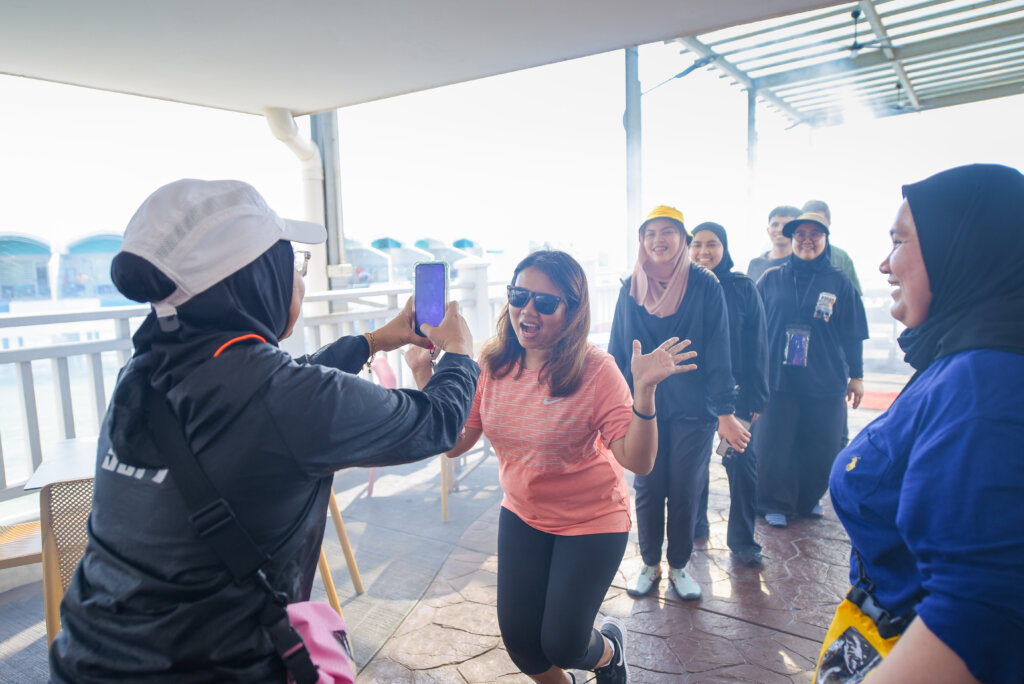
Choosing an activity should start with the purpose of the programme, not the activity itself.
Before finalising your team building programme, ask:
1. What do you want the team to achieve?
Are you trying to improve:
- Communication?
- Collaboration?
- Leadership?
- Trust?
- Problem-solving?
- Cross-department interaction?
- Employee engagement?
Different activities encourage different behaviours.
2. Who is participating?
Consider:
- 👥 Team size
- 👨💼 Job roles
- 🧑🤝🧑 Age range
- 🏃 Physical abilities
- 💬 Language or communication considerations
- 🤝 Existing team dynamics
A challenge that works well for one group may not necessarily work for another.
3. How much time do you have?
A 15-minute energiser is very different from a three-hour team building challenge.
Consider whether the activity needs time for:
- Briefing
- Team planning
- Execution
- Multiple rounds
- Scoring
- Debriefing
4. What does the venue allow?
Before choosing an activity, check:
- Indoor or outdoor space
- Available equipment
- Weather conditions
- Ground surface
- Power supply
- Water access
- Noise restrictions
- Participant movement
- Safety considerations
5. How difficult should the activity be?
An activity should be challenging enough to encourage teamwork without becoming unnecessarily frustrating.
The difficulty can often be adjusted through:
- ⏱️ Time limits
- 🧩 Additional rules
- 📦 Limited resources
- 🗺️ Larger playing areas
- 🔄 Multiple stages
- 🎯 Additional objectives
The best team building programme is not necessarily the one with the most complicated activities.
It is the one where the activities support the intended outcome.
Why Your Team Building Venue Matters 📍
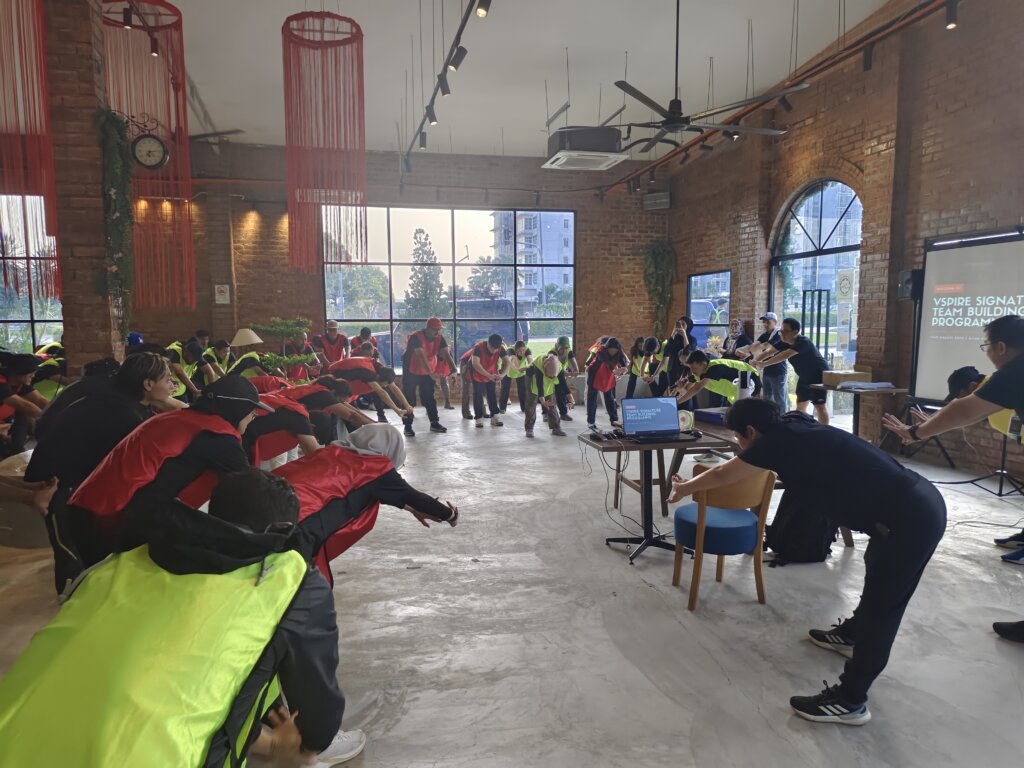
Your venue can influence the type of team building experience you are able to create.
An indoor hotel ballroom may be ideal for activities that require controlled spaces, tables, chairs and presentation equipment.
Meanwhile, a resort, park or outdoor retreat can provide more opportunities for movement-based activities, nature challenges, water activities and larger team competitions. 🌳
For example, Pass The Water can take on a completely different feel when conducted in a resort with suitable outdoor spaces.
This is one reason why choosing the venue should happen alongside choosing the activities.
If you are looking for different places to organise your next corporate team building programme, check out our guide to 5 different team building locations for a refreshing experience, featuring options ranging from nature-focused venues to resorts and retreat locations.
Making Your Team Building Programme More Effective 🌟
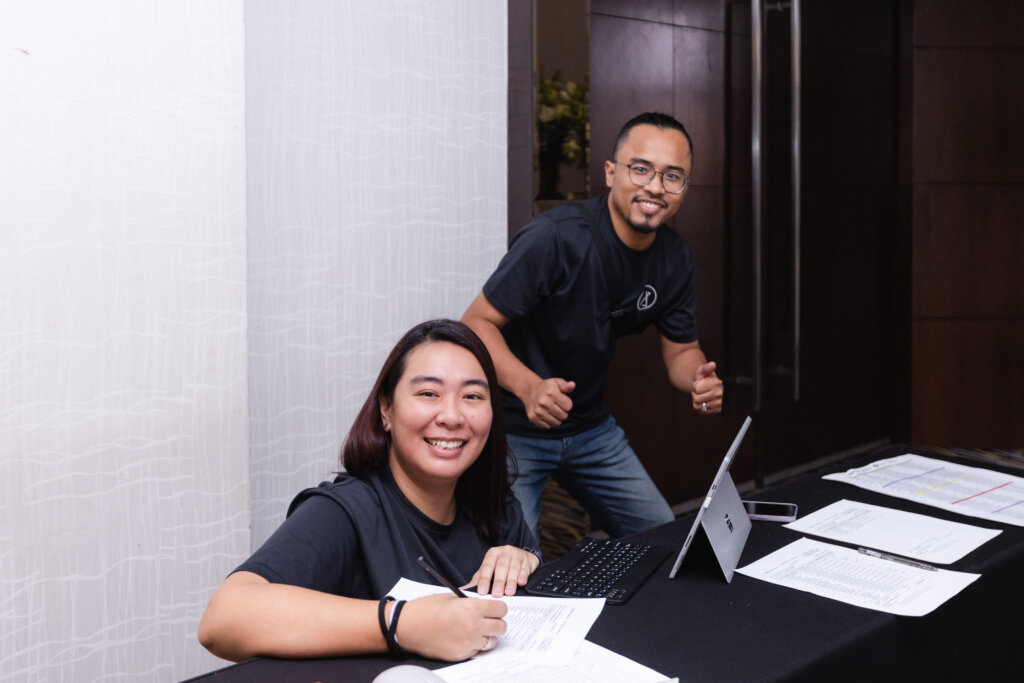
The right team building activities can turn a simple company outing into a more purposeful experience.
Whether you’re looking for indoor team building activities, outdoor team building activities, communication games, problem-solving challenges or large-scale corporate team building programmes, the most important consideration is always the same:
What do you want your team to get out of it? 🎯
Once you know the objective, you can choose the activities, venue and programme format around it.
At Vspire Academy, we design and facilitate corporate team building programmes around different team sizes, objectives, venues and organisational needs.
⬇️ Contact Vspire Academy for a team building consultation. 🤝
Want more Learning and Development content?
Follow our social media:
Hashtags:
#TeamBuildingMalaysia #TeamBuildingActivities #IndoorTeamBuilding #OutdoorTeamBuilding #CorporateTeamBuilding #TeamBuildingIdeas #TeamBuildingGames #EmployeeEngagement #EmployeeExperience #TeamBonding #CorporateEventsMalaysia #CorporateRetreat #CompanyTeamBuilding #HRMalaysia #LearningAndDevelopment #CorporateTrainingMalaysia #TeamBuildingVenue #OutdoorTeamBuilding #IndoorTeamBuilding #VspireAcademy
Keywords:
indoor team building activities, outdoor team building activities, team building activities Malaysia, corporate team building Malaysia, team building ideas Malaysia, indoor team building Malaysia, outdoor team building Malaysia, corporate team building activities, team building games Malaysia, team building games, fun team building activities, effective team building activities, team building activities for employees, team building activities for corporate teams, team building exercises, corporate team building games, employee engagement activities Malaysia, employee team building activities, communication team building activities, problem solving team building activities, team building activities for large groups, team building activities for small groups, indoor corporate team building, outdoor corporate team building, team building programme Malaysia, corporate team building programme, team building venue Malaysia, corporate event activities Malaysia, company team building Malaysia, team bonding activities Malaysia, team building ideas for work, team building activities for work, Amazing Race team building, Bridge To Unity team building, Photography Treasure Hunt, Roti Canai team building, Rock Paper Scissors Train, Pass The Water team building, Balance The Bottle team building, corporate retreat Malaysia, employee engagement Malaysia, HR team building ideas, HR Malaysia, corporate training Malaysia, Vspire Academy